By: Teton
Date: 26/6/202026

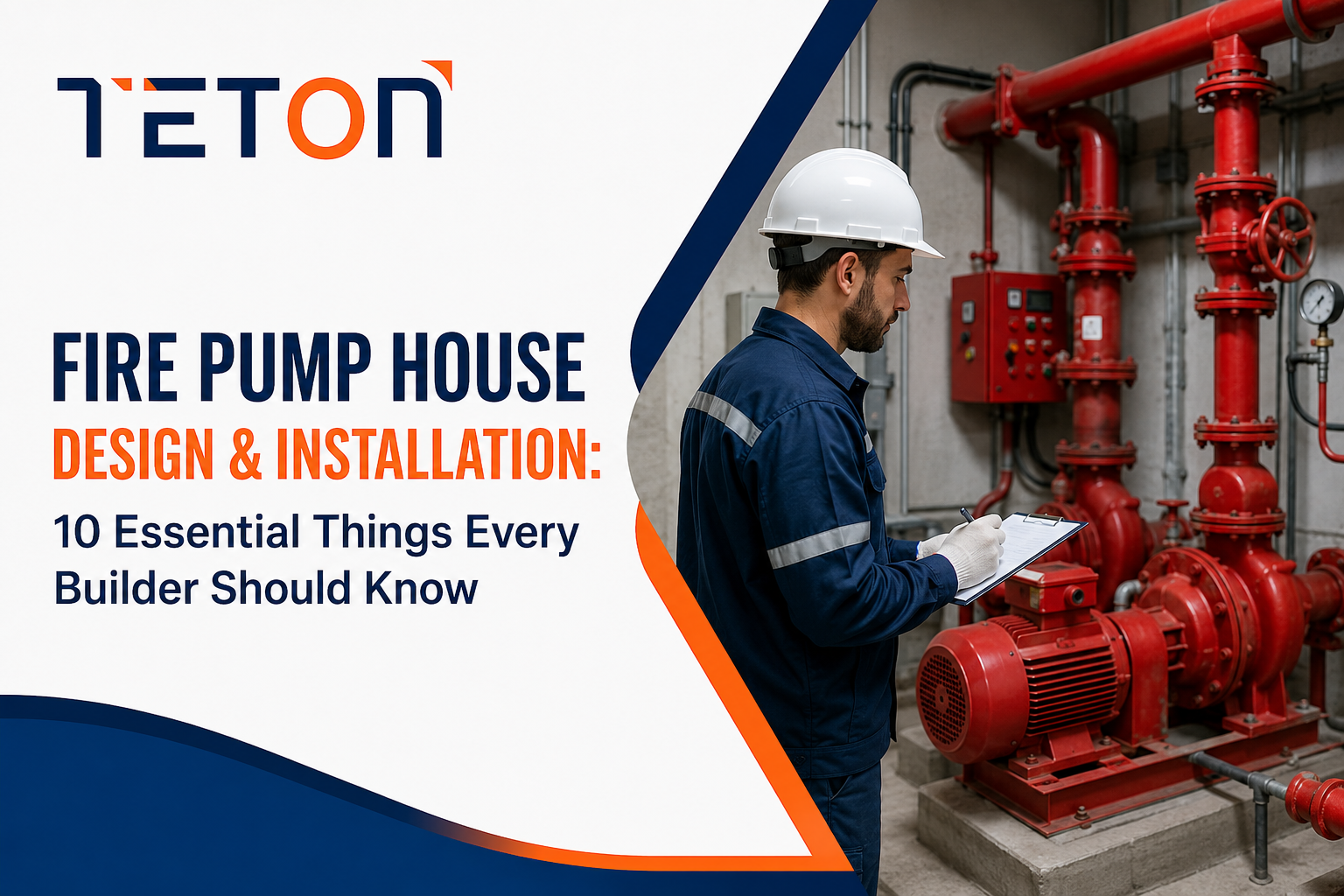
Fire Pump House Design & Installation: 10 Essential Things Every Builder Should Know

Fire Pump House Design & Installation

Fire Safety is an important element for every business, industrial, and residential building. A properly planned Fire Pump House Design & Installation will help ensure adequate water flow and pressure to keep everyone safe.

No matter whether you are planning to construct a factory, warehouse, hospital, high rise buildings, or any other commercial structure, it is imperative to opt for a proper Fire Pump House Design & Installation service. We at Teton MEP offer our clients complete fire protection solutions.

1. Understand the Importance of a Fire Pump House

The fire pump house acts as the core of any firefighting system. The fire pump house includes all those devices and equipment that are needed for maintaining pressure in case of a fire.

Good Fire Pump House Design & Installation guarantees efficiency of the sprinklers and fire hydrants in case of an emergency situation.

2. Select the Right Location

The position of the fire pump house greatly influences how well the system functions.

A complete HVAC installation generally includes:
  • Be easily accessible for inspection purposes.
  • Not be prone to flooding.
  • Have adequate ventilation.
  • Be positioned near the water source.
  • Have ample room for future growth.
Strategic planning done at this level makes the whole process effective for the system.

3. Select the Right Fire Pump to Install

There are different kinds of fire pumps that need to be installed based on the kind of project being undertaken.

Some of these kinds of fire pumps include:
  • Electric Motor Fire Pumps
  • Diesel Engine Fire Pumps
  • Split Case Fire Pumps
  • End Suction Fire Pumps
  • Vertical Turbine Fire Pumps
Choosing the right equipment is an important factor in achieving successful fire pump house design and installation.

4. Follow Fire Safety Standards

Adherence to fire safety regulations is required for all projects.

Fire protection system design must comply with:
  • National Building Code (NBC) regulations
  • NFPA standards
  • Legal requirements of local fire department
  • Individual safety standards of clients
Adherence to these regulations provides safety and reduces complexities.

5. Provide a Reliable Water Source

Even the best fire pump requires a reliable water source to run.

The construction company needs to provide:
  • Underground fire water tanks
  • Storage reservoirs
  • Connection to municipal water supply
  • Adequate water sources
Reliable water source is one of the crucial elements in Fire Pump House Design & Installation.

6. Provide Proper Ventilation and Drainage

Heat is generated in pump rooms and requires a controlled environment.

A good plant would have:
  • Proper ventilation of fresh air
  • Equipment for mechanical exhaust if needed
  • Floor drainage
  • Means to protect from moisture
This will increase equipment’s longevity and efficiency.

7. Include Backup Power Systems

Fire hazards can occur simultaneously with the failure of electrical supply.

In order to maintain constant working of your system, you need:
  • Standby diesel pumps
  • Emergency generator set up
  • Transfer switch
  • Battery backup systems
Backup power improves reliability of system.

8. Plan for Easy Maintenance

Regular inspections are necessary for optimum performance in the long run.

When designing and installing Fire Pump Houses, sufficient space must be left near the pumps, valves, and controls to allow maintenance.

Easy accessibility lowers the cost of repairs.

9. Use High Quality Parts

The efficiency of your firefighting system will be determined by the quality of its parts.

Always use:
  • Certified fire pumps
  • Heavy-duty piping
  • Reliable control panels
  • Premium valves
  • Accurate pressure gauges
Good-quality machines guarantee reliable performance during emergencies.

10. Test and Commission the Entire System

Before delivery of the project, all necessary testing should take place.

The following tests should be done:
  • Testing of the pumps’ performance
  • Pressure tests
  • Flow tests
  • Controller tests
  • Alarms tests
These will prove the efficiency of the Fire Pump House Design & Installation in emergencies.

Common Mistakes To Avoid

There are several reasons why many fire protection systems do not work. You should avoid making these mistakes:

  • Incorrect pump sizing
  • Under-storage of water
  • Bad ventilation
  • Failure to drain
  • Lack of back-up power
  • Not meeting standards
  • Postponing maintenance planning
Good engineering and installation will help you avoid these problems.

Why Should You Select Teton MEP for Your Fire Pump House Design & Installation?

Teton MEP is a fire protection systems design specialist offering Fire Pump House Design & Installation Services, among many others. We have a team of professionals who offer full-service fire pump house design and installation services. We emphasize quality, compliance, and performance to make sure that all our projects meet the highest levels of safety while ensuring their long-term reliability.

Conclusion

Teton MEP is a fire protection systems design specialist offering A professional system is certainly one of the best investments a building can make. With the right equipment, adherence to codes, proper water supply, and testing, it is possible to build a reliable infrastructure of fire protection. Whether you are starting a new construction or improving your existing infrastructure, the help of professionals from Teton MEP will ensure the design of your fire protection system.

Share this :

Blog & Articles

Related Posts