
Fire Pump House Design & Installation: 10 Essential Things Every Builder Should Know
By: Teton Date: 26/6/2026 Fire Pump House Design & Installation: 10 Essential...
Electrical systems are fundamental for all industrial plants and help in power supply, electrical switch boards, cabling, earthing, illumination, automation, and other safety systems. Good electrical infrastructure can play an important role in maintaining good performance of industrial units.
Selection of the appropriate Electrical Contractor for Industrial Projects is vital for the proper functioning of new plants, expansion work, and improvement in the infrastructure of industrial units.
Technical services included in industrial electrical contracting include electrical designing, electrical installations, electrical power distribution, cabling, installation of switch panels, earthing, lighting, and testing & commissioning. Depending upon the requirement of individual industrial projects.
There could be a need for HT/LT panels, substations, cable trays, power & control cables, electrification, lightning protection and automation cables. These services can be coordinated by an experienced Electrical Contractor for Industrial Projects.
The safety factor plays an important role in the design and implementation of industrial electrical projects. High-voltage installations, heavy machines, production equipment, and complicated electrical installations should be installed properly and protected accordingly.
If installation works are done improperly, then there will be many risks for workers, machinery, and everyday operation. Professional electrical contractors pay particular attention to proper installation, electrical protection, earthing, cabling, and safety procedures.
All these factors should be taken into account throughout the process: from designing and installation to commissioning and transfer. It is better to hire a professional contractor in order to manage your electricity.
Electrical energy is an integral component to run the industrial machinery, process machines, lighting and utilities, control systems etc. In order to provide electrical energy efficiently in all parts of the facility, an appropriate power distribution system needs to be designed.
With proper coordination, an experienced contractor can handle the substation, HT/LT panel, cable laying, cable termination, electrification inside and outside etc. The services enable power distribution and smooth operation of industrial activities.
Teton Projects offers electrical contracting services including 66kV/11kV substation, electrical panels, automation related cabling etc. The services will suit the requirements of industrial projects.
Electrical installation quality can be instrumental in ensuring the effective operation of an industrial facility. Correct electrical installation ensures reliable operation of electrical installations without any possible problems.
Proper execution of such activities as cabling, termination, installation of electrical panels, earthing, lighting, and others is important. Professional installer acts in accordance with project requirements, equipment needs, cable handling, and safety regulations.
Correct installation of electrical installations with the use of appropriate testing and commissioning guarantees readiness for operation of the electrical installations.
Technical and safety considerations must be taken into account while planning industrial electrical projects. Before beginning the project, the company must analyze the technical and professional qualifications of the contractor.
The selection of an Electrical Contractor for industrial projects needs to take into consideration such things as licensing, engineering experience, industrial experience, quality control, safety, and capability to manage the required electrical scope.
Teton Projects describes themselves as a licensed electrical contractor of Government of Gujarat and gives the following criteria: engineering experience, supervisor competence, quality control, safety measures, and project management. The above-listed features may be useful for selecting a contractor.
Industrial projects usually entail electrical, mechanical, HVAC, fire fighting, automation, instrumentation, and structural works. For the systems to function properly, coordination becomes very essential during the installation and completion of the project.
Electrical systems could be used for operating machinery and production machines, HVACs, fire-fighting systems, and automation systems. Coordination between such systems could play a role in ensuring smooth installation and maintaining the project requirements.
Teton Projects undertakes the installation of electrical, mechanical, and fire fighting installations in industrial and commercial projects. The multidisciplinary aspect will ensure better coordination between various engineering disciplines.
The process of electrical installation involves much more than just installation of the required equipment and cables. There are testing and commissioning stages that must be considered prior to regular operation.
Testing ensures that all installed elements and systems work properly, whereas commissioning is a preparation stage aimed at ensuring the ready installation can operate as required.
It is essential that a contractor act professionally and carry out all the required procedures. It is particularly important for industrial buildings because there, electricity is used to power production machines.
Industrial projects usually have several activities taking place at the same time. Delay in the electrical installation process can cause delays in the equipment installation process, commissioning, being ready for production, and many other phases of the project.
The best option here would be to engage an experienced electrical contractor who will properly supervise and execute the project. They will be able to coordinate electrical activities based on the project’s schedule.
As Teton Projects states, the company has a great ability to execute the entire project, provide quality assurance, reliable project delivery, and has a highly experienced engineering team.
When hiring an electrical contractor to work on an industrial job, businesses might consider the following criteria:
Considering these criteria can allow businesses to find an appropriate contractor for their project.
Fire safety inspections should not be treated as a one-time activity. The frequency should depend on the factory’s risk profile, applicable regulations, equipment requirements, and recommendations from qualified professionals.
A practical approach is to conduct:
Any identified deficiency should be assigned to a responsible person with a defined corrective-action timeline.
Selection of an electrical contractor should not be just about the cost factor. Industrial electrical infrastructure involves a significant amount of investment, which is why businesses need to look at technical expertise, experience, safety, licensing, quality control, and project execution capability.
The proper electrical contractor for industrial projects could assist in various aspects of the electrical scope from planning to installation, testing, commissioning, and handover.
The Teton Projects Pvt. Ltd. provides electrical contracting services to satisfy the demands of industries and businesses such as power distribution, HT/LT Panels, Substations, Electrification, Earthing, Lightning Protection, Cable Installation, and Automation Cable Installation.
Selecting the right Electrical Contractor for Industrial Projects is vital in order to ensure that a safe, reliable, and efficient electrical infrastructure is created. All phases starting from installation to power distribution and testing, commissioning and automation cabling require technical know-how.
Teton Projects Pvt. Ltd. offers electrical contracting services in all industrial and commercial projects with engineering knowledge, quality control, safety procedures and effective project execution.
For all your industrial facility or upgrading electrical needs, get in touch with Teton Projects Pvt. Ltd.
By: Teton Date: 26/6/2026 Fire Pump House Design & Installation: 10 Essential...
By: Teton Date: 5/6/2026 HVAC Installation Services in Ahmedabad: Complete Guide for...
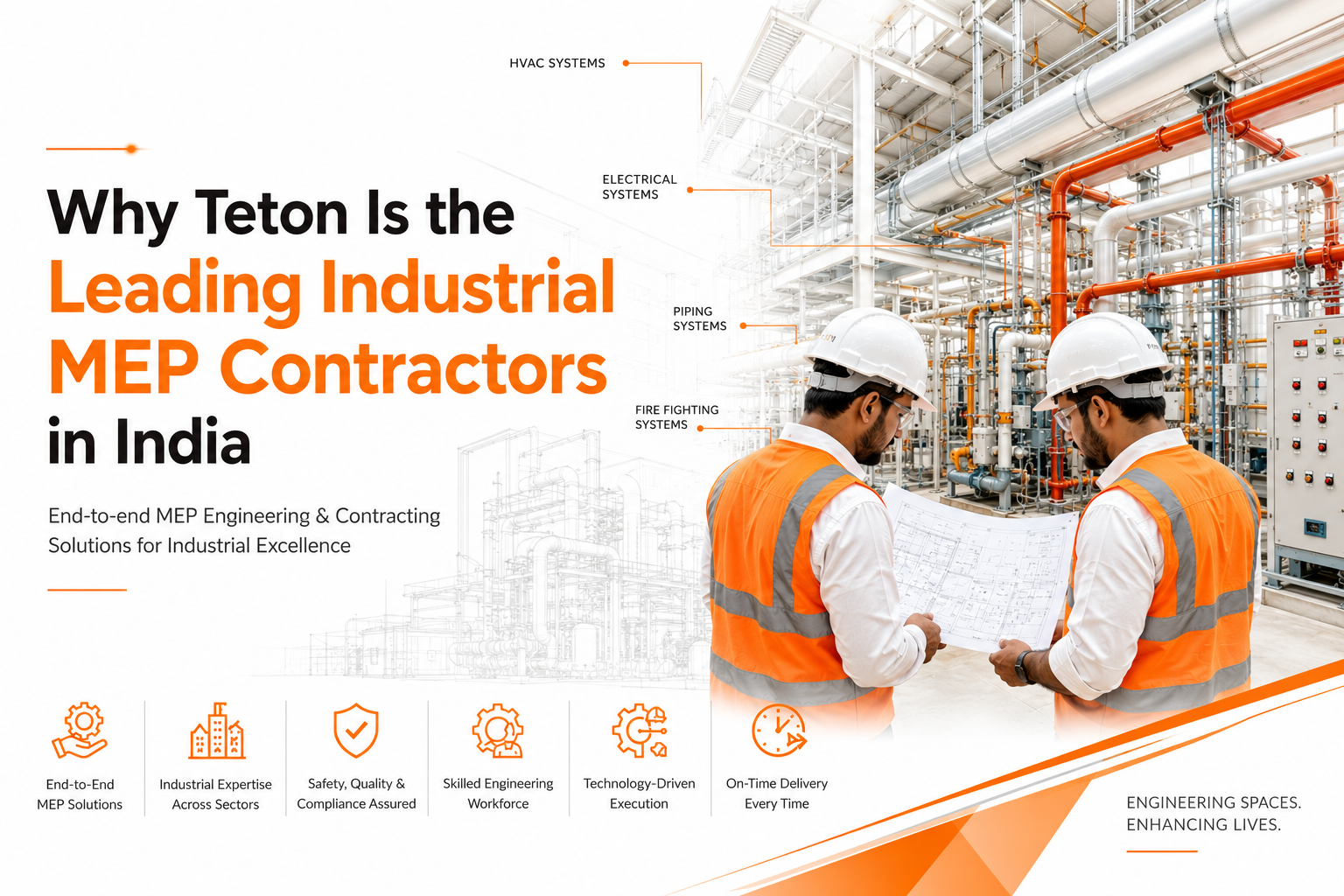
By: Teton Date: 16/4/2026 Why Teton Is the Leading Industrial MEP Contractors...